
About two months ago, a friend asked me this question during a speaking class.
I turned around, thought for a moment, and asked her, half jokingly:
“What do you think?”
The question did catch my interest. That evening, I sat down to think it through and put it to other friends to hear their views.
A few days ago, I finally finished the exams and activities that had kept me busy for two months. I decided to work through some books I had long wanted to read, including Sartre’s Nausea and Camus’s absurdist trilogy. The ideas came pouring out, and I wrote this essay in a burst of enthusiasm.
Although, when I excitedly showed the finished piece to Chouyi, I suddenly realized I had misheard the original question. Never mind—let’s keep going.

Camus opens The Myth of Sisyphus with: “Il n’y a qu’un problème philosophique vraiment sérieux : c’est le suicide” (Camus 3). “There is only one truly serious philosophical problem: suicide.”
Of course, Camus is not encouraging suicide. Quite the opposite: by examining it, he opens a constructive inquiry into the meaning of life. Starting from this philosophical question, I found that different schools of thought reach different conclusions about how to live and how to choose life. I found that fascinating, and it brought the question back into focus. I read far more, and became more confused… Still, that must be a good thing, because now I’m smarter. (Right?)
In thinking this through, I drew on ideas from At the Existentialist Café and On the Vanity of Existence to offer a few modest thoughts on whether suicide counts as murder. (If you have read those books, some of this will sound familiar.)
First, my position: suicide is not murder.
I. The legal definition
1.1 Defining murder.
Drawing together Camus and Sartre, suicide and murder differ fundamentally. Suicide is an individual’s choice concerning their own life, whereas murder takes the life of another. Both negate “existence,” but suicide negates the self and murder the other (Camus 72; Sartre 158).
In modern terms, we can roughly divide the definition of murder into three questions:
1. Does it intentionally and unlawfully cause the death of another person?
2. Does it involve premeditation and malice?
3. Does it inflict grave harm on a victim and seriously disrupt social order (“Homicide Law Reform” 14)?
1.2 Intergenerational effects are not inevitable.
We can examine these criteria through the question of intergenerational transmission of suicide. The hypothetical “victim” here might be the person’s descendants, or even their future self. (Drawing on Camus: suicide does not destroy the past self, but destroys the future self that would otherwise have existed.)
Research suggests that suicidal behavior can be transmitted across generations through biological, psychological, social, and environmental factors. Yet this transmission is not deterministic. It depends on complex mechanisms, and personal agency, social intervention, and cultural factors can interrupt the cycle.
On this account, suicide does not carry the intention, premeditation, or malice toward these hypothetical victims that the definition requires.
As for effects within a family, such as the inheritance of mental illness, neurobiological research associates a family history of suicide with changes in the volumes of particular brain regions: the precentral and postcentral gyri, posterior parietal cortex, superior temporal gyrus, planum temporale, and cingulate cortex (Wen et al. 141; Oquendo et al. 1123).
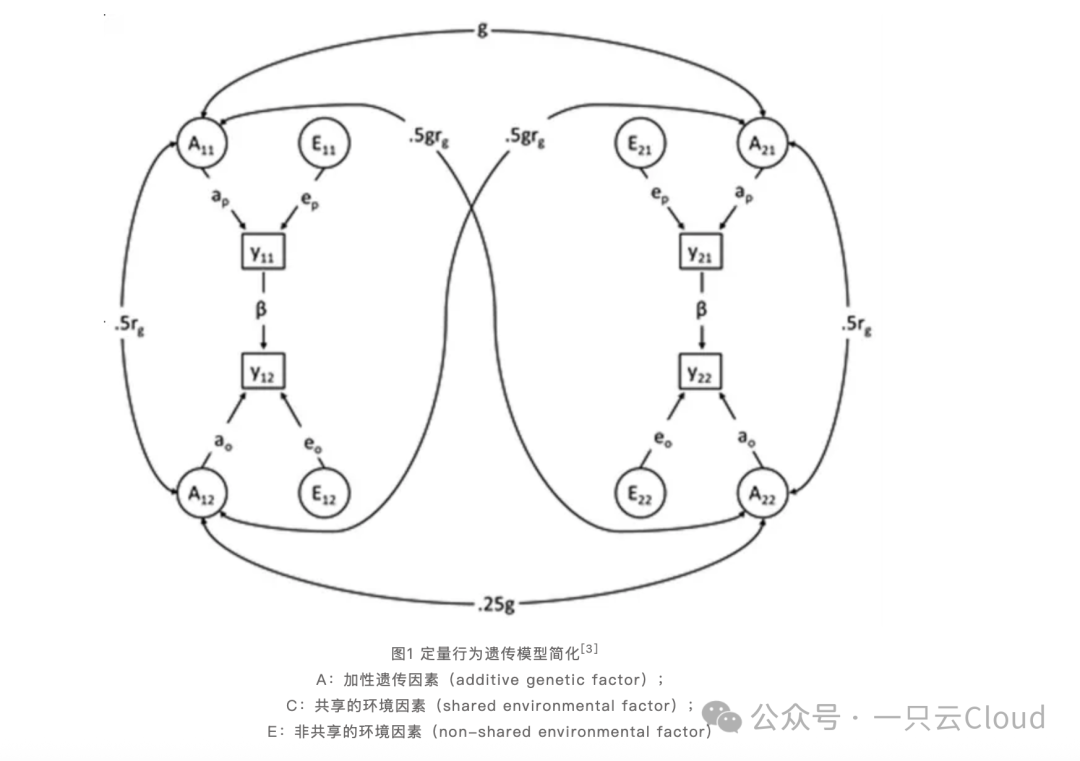
Because these outcomes are not inevitable, however, they do not demonstrate that suicide necessarily causes grave harm to the hypothetical victims outlined above. In Durkheim’s Suicide, suicide reflects disturbed social integration, as in egoistic suicide, but has limited disruptive effects on social order unless it prompts imitation, such as the “Werther effect” (Durkheim 217). Even when suicide places demands on public resources, that is a systemic consequence, not the person’s intended objective. Its effects on social order are generally indirect and unintended.
On these grounds, suicide does not meet the legal definition of murder.
II. Changing ethical views of suicide
2.1 Historically and religiously, only Jewish missionaries, on this account, regarded suicide as a sin and used their philosophical foundations to preach that it was a crime. Even today, we hear sermons such as “suicide is a coward’s choice” or “suicide is running away.” To me, these are not fundamentally different. Voltaire, by contrast, regarded it as a victory over nature rather than a sign of cowardice (Voltaire 142).
In ancient Europe, opposition to suicide reaches back to slave societies. In ancient Greece, for example, a person who died by suicide could be stripped of title and property and denied an honorable funeral (Schopenhauer 149). Even without a basis in scripture, authorities could brand the person a criminal.
I see this chiefly as a warning or a precedent for punishment. As Schopenhauer asks, if someone no longer fears death, will they fear legal sanctions (Schopenhauer 150)? Punishing a survivor seems more like punishing the failure of the attempt than the motive for it—or a crime of “murder.”
Socrates and Aristotle regarded suicide as disrespectful toward the gods and unjust toward society and the state. Aristotle went further, arguing for measures to punish the person and their family (Aristotle 1138a10–15). From those perspectives, suicide did violate the law, but it remains difficult to say that the offense was “murder.” (Ironically, we know that Socrates chose death after being convicted of impiety, and Aristotle is also said to have died by suicide.)
Many philosophers in the following centuries expressed their views. The ancient Greek Epicurus praised suicide, while the Stoics treated it in their writings as a noble, heroic act, particularly in the works of Seneca. The Roman philosopher Seneca also understood it as release from suffering and from the infirmities of age. Merely continuing a monotonous existence was not enough: one should live well. A wise person should consider the quality of life, not its quantity (Seneca, Epistles 70.4–5). BTW, this was the observation that stayed with me most during my reading.
In India, suicide has also existed as a religious act, including sati, a widow’s death on her husband’s funeral pyre, and jal samadhi, self-immersion in the Ganges. In those cultural contexts it is clearly different from criminal murder. Noble characters in plays such as The Orphan of Zhao and Mahomet also end their lives. Does that make them guilty? Their deaths instead express their values: Cheng Ying’s martyr-like suicide, for example, embodies the Confucian ethics of loyalty and righteousness.
Faced with large numbers of Christian suicides, the theologian Augustine, and later Aquinas, argued against the practice. Their arguments dominated almost the whole of medieval Europe.
2.2 A shift in thinking after the Enlightenment
The first person to dare argue that suicide was not a crime was the eighteenth-century philosopher Hume.
From the eleventh century, English law classified suicide as a felony. A coroner examined the dead to determine whether the death was an act of God or a personal felony, deciding whether property passed to survivors or was confiscated by the state.
In On Suicide, Hume criticized English law. The essay appeared only after his death and was immediately suppressed, with only a few copies sold secretly at high prices. Here are several of his central arguments:
“First, if suicide disrupts the natural order, then saving a life does so too. If a stone is about to strike someone’s head and you push it aside, extending that person’s life, you interrupt nature and intrude on God’s special domain. Clearly, this would be an absurd argument.
Second, suicide need not harm society. A person withdraws from society and is no longer involved with it.
Third, suicide need not run against the person’s interests: misfortune can make life no longer worth continuing” (Hume 145–146).
The better-known Kant uses rational, non-utilitarian, and non-theological arguments to support an absolute prohibition on suicide (Kant 4:421).
Camus also introduces the idea of “philosophical suicide”: knowing the fundamental condition of meaninglessness, yet persuading oneself that a value exists which deserves unquestioning devotion (Camus 54). Unlike physical suicide, it is a spiritual evasion. Camus rejects it because it escapes the absurd instead of actively resisting it. On this reading, it is an exercise of agency in which subject and object are wholly identical, an interrogation of the self. Philosophical suicide can be called a form of murder insofar as it negates one’s own values—but only in a formal sense. We cannot simply settle whether this idea is right or wrong; it can only serve as an additional consideration.
In On the Vanity of Existence, Schopenhauer presents extensive arguments in defense of those who die by suicide and writes of it approvingly. Yet he also identifies its metaphysical limits: “Suicide offers only apparent release, not true liberation. The person cannot destroy the will itself, but only its manifestation at a particular time and place” (Schopenhauer 289).
Suicide is therefore difficult to assess with a simple yes or no. What seems clear, however, is that it is not sufficient grounds for criminal conviction, and certainly should not be prosecuted as “murder.”
The old criminal charges were themselves strained. Injustice to society, disrespect toward the gods—do these not rest on selective interpretations? From Sartre’s perspective, suicide might even be understood as a negative consequence of social alienation and a mistaken choice.
In my question, is suicide murder?, “murder” can also be understood in terms of consequences and responsibilities across generations. I explained in Part I why I do not find that argument convincing.
Schopenhauer instead describes suicide as an act worthy of respect, not a mark of sin. He also calls it a clumsy experiment intended to discover what happens to human knowledge and existence after death (Schopenhauer 287). It is “clumsy” because death also ends the consciousness that could learn the result. Earlier criminal laws did not adequately examine either the consequences or the motives of suicide, and lacked a scriptural basis for condemnation. People therefore have grounds to ask a preacher what gives him the right to occupy the pulpit, pronounce the dead guilty, or deny an honorable funeral to those who voluntarily left life. Like Hume, this view also holds that suicide can sometimes reduce society’s burdens and so deserve praise.
Across these perspectives, the question cannot be answered with an unqualified yes or no. Within the broadly accepted values and legal systems of modern society, however, suicide is generally no longer treated as a crime. Assisted suicide, in some jurisdictions, may be treated as murder.
To be clear: philosophers’ arguments about suicide, from ancient Greece and Rome to modern times, concern not only life’s end but its nature. This is an academic discussion, not a proposal to act.
III. An existentialist perspective: suicide as a choice about life
At this point, we have more or less finished discussing the serious question of suicide. Since we have come this far, though, I would like to add a few thoughts to close. (This is the difficult part.)
Learning philosophy can leave us confused, excited, and even lost. Existentialism suggests that authenticity and the demands we make of life open the possibility of attaining truth and freedom through effort. But that possibility comes with limitless anxiety, even fear.
As Sartre puts it in an interview, “There is no marked-out path by which a person can save himself; he must continually create his own path” (Sartre 15). The act of creating brings freedom, but also an invisible responsibility. We can no longer pass responsibility to someone else. Hope rests with us, and that responsibility frightens us.
Following Sartre’s logic, suicide is also an act of self-creation. When someone finds the responsibility of “creating a path” too heavy, it can appear as a choice about life. Yet it eliminates every future possibility of freedom. From an existentialist standpoint, it therefore looks more like a failed creation: a surrender to the absurd rather than a rebellion against it.
But the implications do not end there.
I am wandering a little. My point is that philosophy is a practice, not an answer. We do not study it simply to accumulate knowledge or wisdom. By reflecting philosophically on life’s impermanence, we train ourselves. The Stoics and Epicureans of the classical world likewise practiced philosophy as a way of living. They believed it could make them more resilient, less governed by circumstances, and better prepared for grief, fear, anger, disappointment, and anxiety.
Nietzsche takes this further: we need not the exalted moral or theological ideals of traditional philosophy, but a searching critique of culture and history. Philosophical inquiry can be understood as a study of our own moral genealogy. On these views, philosophy is neither a purely intellectual pursuit nor a collection of cheap self-help techniques. It is a discipline through which we continue to grow and learn to live responsibly as whole human beings (Bakewell 28). It may not let us transcend ourselves, but it can help us see our illusions, know ourselves, and live with greater energy and resolve. We can recognize that life lacks inherent meaning and still live it wholeheartedly.
That brings us back to The Myth of Sisyphus: acknowledging that life has no predetermined meaning is precisely an opportunity to begin living it.
The world has no inherent meaning; life has none either. Yet we can still experience it. Even in an absurd world, amid meaningless repetition, we must resist, affirming that we exist and realizing our authenticity. This points us toward the more courageous choice: with our eyes open, under the weight of freedom, to keep pushing the stone uphill.
As Camus writes:
“One must imagine Sisyphus happy.”
"Il faut imaginer Sisyphe heureux."
Works cited (in order of appearance)
Albert Camus. Le Mythe de Sisyphe. Gallimard, 1942.
Jollant, F., Wagner, G., Richard-Devantoy, S., Köhler, S., Bär, K.-J., Turecki, G., & Pereira, F. (2018). Neuroimaging-informed phenotypes of suicidal behavior: A family history of suicide and the use of a violent suicidal means. Translational Psychiatry, 8(1), 120. https://doi.org/10.1038/s41398-018-0170-2
Mann, J. John, and Dianne Currier. "Stress, Genetics and Epigenetic Effects on the Neurobiology of Suicidal Behavior and Depression." European Psychiatry, vol. 25, no. 5, 2010, pp. 268-271.
O’Reilly, L. M., Kuja-Halkola, R., Rickert, M. E., Class, Q. A., Larsson, H., Lichtenstein, P., & D’Onofrio, B. M. (2020). The intergenerational transmission of suicidal behavior: An offspring of siblings study. Translational Psychiatry, 10(1), 173.
Wen, Xiao, et al. "Brain Structural and Functional Signatures of Multi-Generational Family History of Suicidal Behaviors in Preadolescent Children." Molecular Psychiatry, vol. 1, no. 10, 2023, pp. 782-91.
Wen, Xiao, et al. "Associations of Bullying Perpetration and Peer Victimization Subtypes with Preadolescent's Suicidality, Non-Suicidal Self-Injury, Neurocognition, and Brain Development." BMC Medicine, vol. 21, no. 1, 2023, p. 141.
Durkheim, Émile. Suicide: A Study in Sociology. Translated by John A. Spaulding, Routledge, 2002.
Schopenhauer, Arthur. The World as Will and Representation. Translated by E. F. J. Payne, Dover Publications, 1966.
Aristotle. Nicomachean Ethics. Translated by W.D. Ross, revised by J.O. Urmson, The Complete Works of Aristotle, edited by Jonathan Barnes, vol. 2, Princeton UP, 1984, pp. 1729-1867.
Augustine. The City of God against the Pagans. Translated by R.W. Dyson, Cambridge UP, 1998.
Seneca, Lucius Annaeus. *Epistles 66-92.* Translated by Richard M. Gummere, Harvard UP, 1920. Loeb Classical Library 76.
Thomas Aquinas. Summa Theologica. Translated by Fathers of the English Dominican Province, Benziger Bros., 1947. Christian Classics Ethereal Library, www.ccel.org/ccel/aquinas/summa.html.
Hume, David. "On Suicide." Essays on Suicide and the Immortality of the Soul, 1783.
Hume, David. Essays on Suicide and the Immortality of the Soul. Edited by John Vladimir Price, Thoemmes Press, 1992.
Bailey, Joanne. Death and the Marginalized: Suicide in Early Modern England. Oxford UP, 2018.
Murray, Alexander. Suicide in the Middle Ages, vol. 2. Oxford UP, 2000.
Kant, Immanuel. Groundwork of the Metaphysics of Morals. Translated by Mary Gregor, Cambridge UP, 1998.
Bakewell, Sarah. At the Existentialist Café: Freedom, Being, and Apricot Cocktails. Other Press, 2016.
Sartre, Jean-Paul. Interview by C. Grisoli. The Last Chance: Roads of Freedom IV, 1945, p. 15. Originally published in Paru, 13 Dec. 1945.
One more thing. I originally wanted to rewrite this in English after finishing, partly to show off, but my abilities have their limits… And if the whole thing were in English, I doubt many people would read it closely. At least in Chinese, a quick skim should give you some idea of what I mean. (I hope!) I really should improve the formatting of this account, too.
Also, I have put off updating this account for too long already. Writing it again in English would take me ages, while this version took just one day. (Impressive, right? )
)
Most of all, I really think this is an interesting question. I simply wanted to record and share a few thoughts of my own. :D
Anyway, thank you for reading. ❤️