
How many times have you shed tears simply because it was an occasion on which sadness was expected?
Are you truly afraid of death, or just rehearsing a response that you were taught to give?
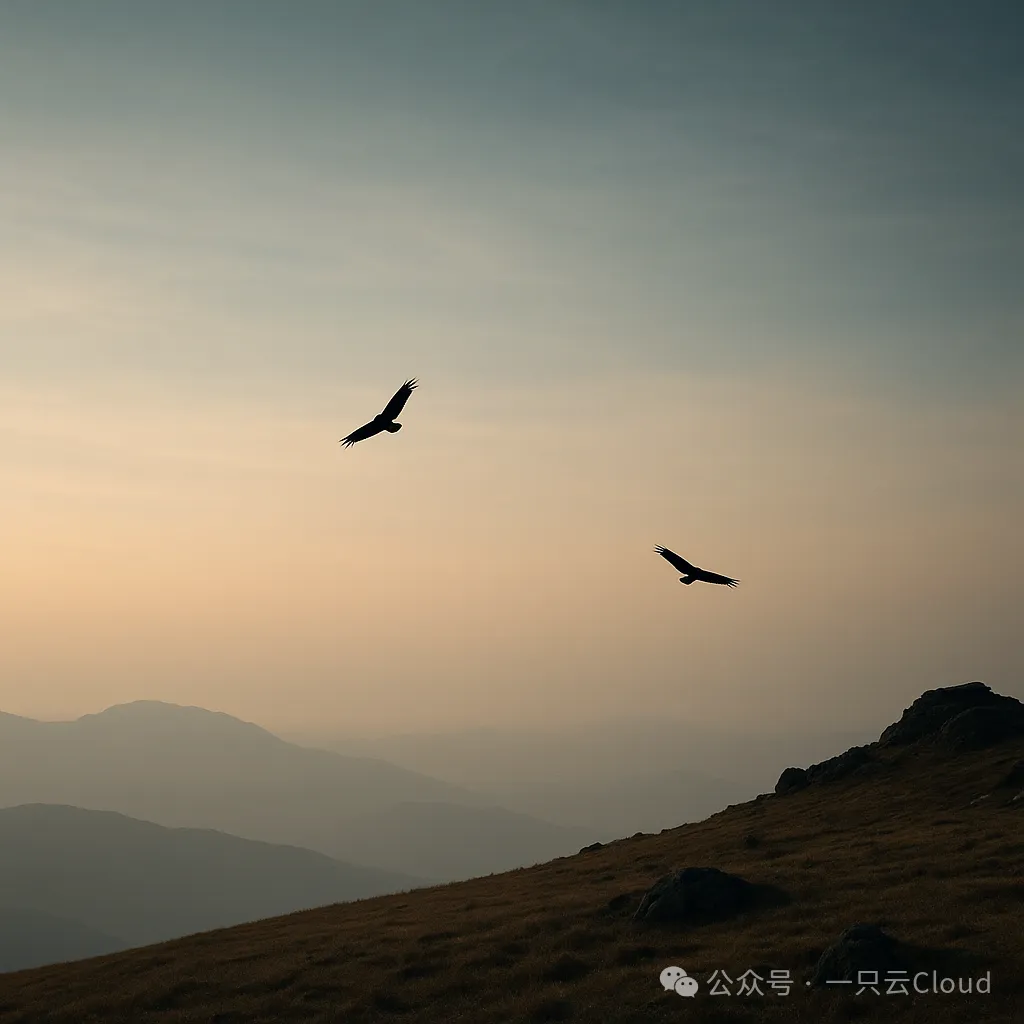
In Tibet, the body of the dead is carried to the mountain’s crown and given to the vultures—a rite without coffin, without lament.
The sky burial fractures the inherited image of how one ought to meet death. Yet the jolt it delivers is itself a mood, born not of death, but of the culture that cradles it.
The Illusion of Mourning
I recall an essay on the Tibetan sky burial. The author argued that the real question is not why they treat death in this way, but whether we have ever truly asked ourselves how we shall die.
Between these two stances, Kierkegaard, after tracing the knot of self, existence, anxiety, and death, divides our relation to mortality into mood and earnestness. These two responses are intertwined.
"To think oneself dead is earnestness, to witness the death of another, is a mood(Humbert 45)."
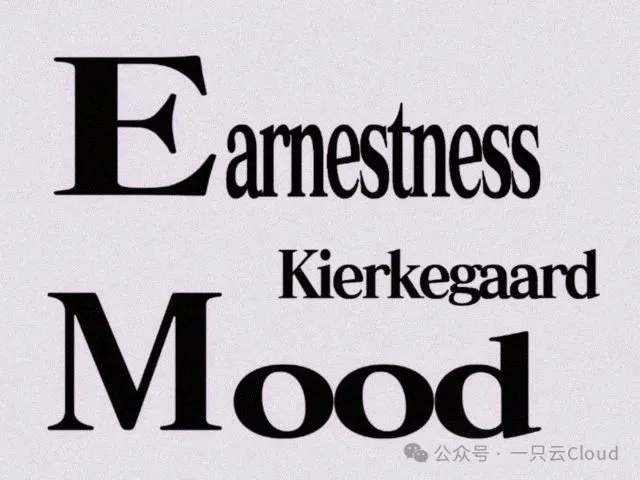
Mood, in Kierkegaard’s sense (1993), is an inauthentic feeling: “a defensive, externally orientated, unexamined and unreflected attitude” (Spitzenstätter and Schnell 1219). It arises from internalizing society’s view of death—from merely witnessing it. He treats mood as our habitual stance toward death: fear, grief, even indifference or avoidance. At its core, it is an evasion. We do not face our own death, but passively inherit the attitudes of others toward it.
Earnestness, by contrast, is an inward awakening. It arises when we confront our own mortality and, through that recognition, seek meaning in life and attain a freedom of the spirit.
The word earnest comes from the Old English eornost, meaning "ardent," "sincere," "grave." It is not mere seriousness, but a way of meeting something, especially life’s most essential questions, such as faith, morality, and death, with authenticity, resolve, and a refusal of frivolity.
In the context of this essay, it signifies both truthfulness and agency: the moment one realizes I too shall die, and from that realization begins to ask, in all honesty, what it truly means to live.
The Freedom of Dying
In the twentieth century, the advances in public health and medicine, along with rising living standards, have extended human life and shifted our fear of death toward a joy in new life.
Yet the cost was subtle. Today, public sympathy for private death has grown thin. The individual is left to face death and grief in solitude, to part in silence, seldom pausing to grasp what it means for a life to vanish.
In The Hour of Our Death, historian Philippe Ariès traces five historical phases in humanity’s attitude toward death: the medieval tamed death; one’s death; the death of the other; and, in modernity, the forbidden or invisible death (Ariès 5–6).
Sociologist Geoffrey Gorer went so far as to liken private mourning to masturbation—performed in secrecy, and, once made public, veiled with prudery (Gorer). Death became a subject to be swiftly disposed of.
And then, on the high plateau, in the rite of sky burial, the ‘civilized concealments’ we cling to are torn apart, as if by the vultures themselves. Death is no longer a private tragedy; it is returned, bare and unmediated, to the sky and the earth.
For many outsiders who come to witness it, this refusal to adorn death is unbearably direct: the end of life is laid open before us without a veil, and we are unsettled. Yet who is truly doing the avoiding—the sky burial, or ourselves?
For the devout Tibetans, sky burial is not mourning but release. Death is met not with evasion, but with an earnest acceptance of life’s end, and an offering back to nature and all living beings.
Here, death ceases to be merely a scene staged by society—a mood—and becomes an authentic dialogue between the individual and faith—earnestness.
Only when one earnestly faces the fact I shall die can one begin to live, moving forward in the loves and hatreds of the world with peace and with freedom.
Work Cites
(In the order of appearance)
Kierkegaard, Søren. Fear and trembling/repetition. Vol. 6. Princeton University Press, 2013.
Chinese Social Sciences Library—The Ethics of Life: A Study of Kierkegaard’s Religious Existential Ethics, “Purpose and Structure of the Book.” www.sklib.cn/booklib/databasedetail?SiteID=122&Type=literature&ID=4752205&fromSubID=.
Humbert, David J. Freedom and Time in Kierkegaard’s The Concept of Anxiety. 1983, McMaster University, thesis, p. 45. McMaster Digital Repository, MacSphere.
Spitzenstätter, Daniel, and Tatjana Schnell. “Effects of Mortality Awareness on Attitudes Toward Dying and Death and Meaning in Life—a Randomized Controlled Trial.” Death Studies, vol. 46, no. 5, Aug. 2020, pp. 1219–33. https://doi.org/10.1080/07481187.2020.1808737.
Ariès, Philippe. The Hour of Our Death. Translated by Helen Weaver. New York: Alfred A. Knopf, 1981. 5-6.
Gorer, Geoffrey. Death, Grief, and Mourning. 1965.
Kierkegaard, Søren. Stages on Life’s Way. Translated by Howard V. Hong and Edna H. Hong, Princeton University Press, 1988.
The Chinese version went up yesterday. I had originally planned to post the whole thing with alternating Chinese and English sentences, but the preview felt too disjointed. If you look closely at both versions, you’ll notice that I approach their sentences and structures quite differently. Reading either language straight through feels much more natural than switching back and forth.
(Trying it this way to preserve as much of the writing’s admittedly modest tension as I can. :-D
Thank you for reading. ❤️