In One Hundred Years of Solitude, Márquez uses a taboo to magnify the experience of loneliness.
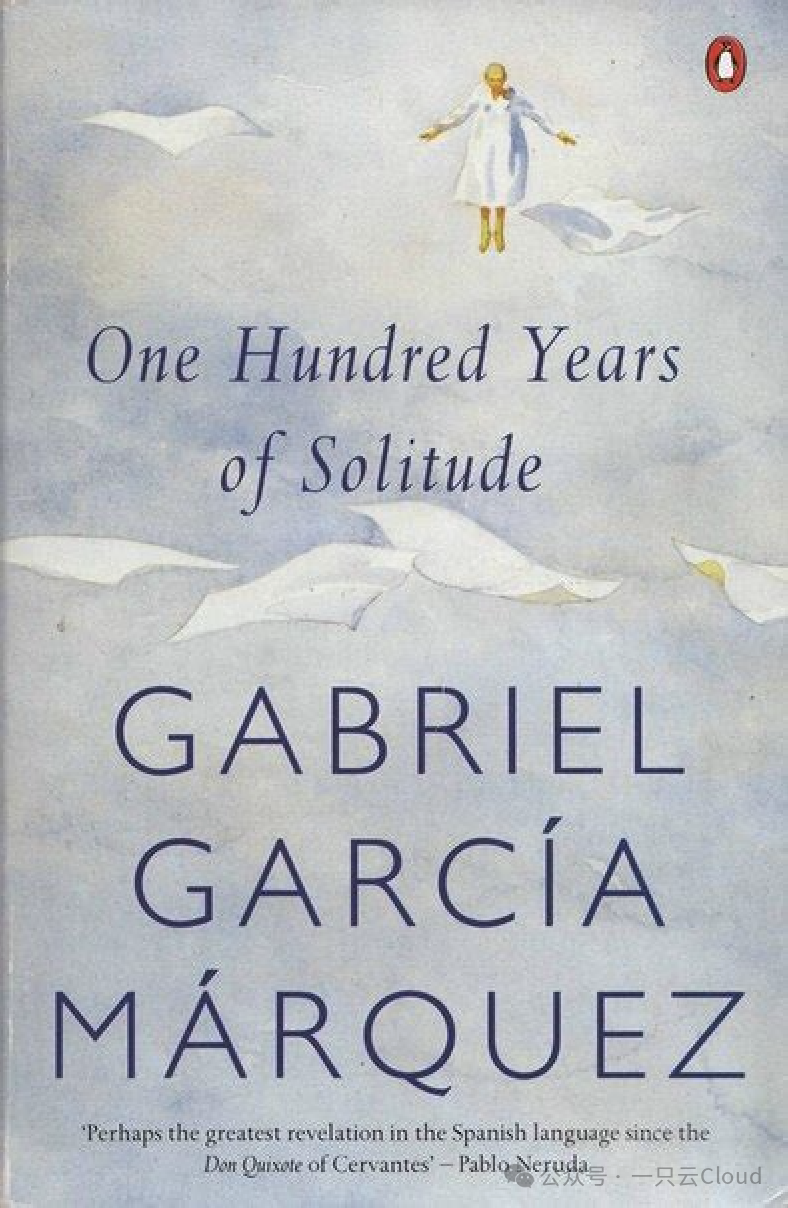
Anyone who has read One Hundred Years of Solitude will remember the child born with a pig’s tail. Every member of this lonely family seems branded by incest.
The family tree that follows is astonishing:
In the first generation, José Arcadio Buendía and Úrsula are close cousins. Terrified of giving birth to a child with a pig’s tail, Úrsula refuses to sleep with José Arcadio. That fear and refusal indirectly lead Arcadio to kill a companion who mocks him. Haunted by guilt and by the dead man’s ghost, the couple leaves home, founds Macondo, and has three healthy children.
In the second generation, José Arcadio experiences sexual feelings toward his mother, Úrsula, during adolescence. After an affair with a card girl, he leaves Macondo with the gypsies. After his brother departs, Aureliano—driven by loneliness and emotion—falls in love with Remedios, the mayor’s youngest daughter, who has not yet reached puberty.
Rebeca, an adopted daughter, sleeps with Arcadio when he returns and marries him. They are not related by blood, yet from the standpoint of social order, many incest taboos concern people without biological ties [1]. Each person owes others a web of obligations shaped by social norms, rights, and status [2]. Left unchecked, these relationships become unbearably complex and self-contradictory.
In the third generation, Arcadio’s son by the card girl, Arcadio II, becomes infatuated with his mother. Aureliano’s son by the card girl, Aureliano José II, falls in love with his great-aunt Amaranta and remains obsessed with her until death.
In the fourth generation, Aureliano II and José Arcadio II swap identities as children and share the same girl. In the fifth, two girls—Meme and Amaranta Úrsula—carry the line forward. After Meme is sent by her mother Fernanda to a distant convent for a year, she gives birth to a son, also named Aureliano.
Unaware of the truth, Aureliano falls in love with his aunt Amaranta Úrsula and fathers a child with a pig’s tail. Amaranta Úrsula dies of postpartum hemorrhage. The seventh-generation Aureliano is born with a pig’s tail and is eaten by ants that same night.
This is the incestuous history of the Buendía family in One Hundred Years of Solitude. The hundred-year family will never appear on earth again.
Even with its bewildering web of relationships, what makes the novel a classic is Márquez’s ingenious rendering of loneliness.
Individual feeling is difficult to socialize or put into words.
Once someone else truly perceives loneliness, it is no longer loneliness. In a sense, possessing feelings, convictions, or knowledge that others cannot understand is enough to make one lonely. José Arcadio, the only person who speaks Latin, is treated as a madman and tied to a tree; Rebeca eats dirt; the colonel spends his days making little goldfish; and the famous line “Macondo is raining” isolates each person as an island. That is why it is hard to judge the repeated incest in the novel. It is part of Márquez’s language for loneliness, but the tangled names and supernatural plot have also caused many readers to give up before finishing.
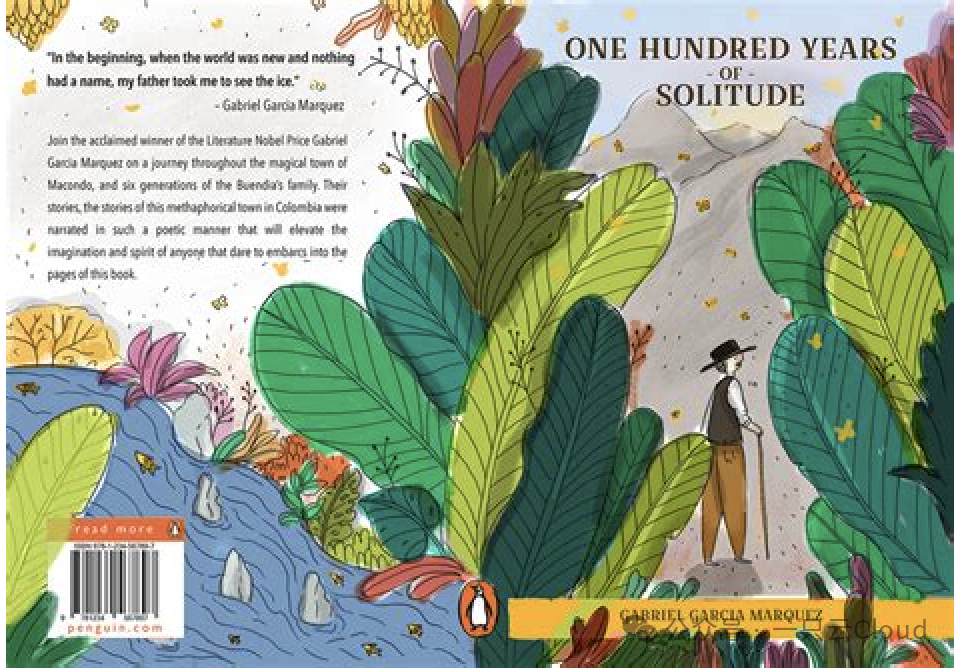
One Hundred Years of Solitude was the first book I read in middle school. I was never much of a reader, but its hallucinatory plot pulled me through in one sitting. I kept returning to it afterward and became a lover of Latin American literature.
With that literary background in place, let us turn to this year’s John Locke Philosophy Question 3: Why Is Incest Wrong?
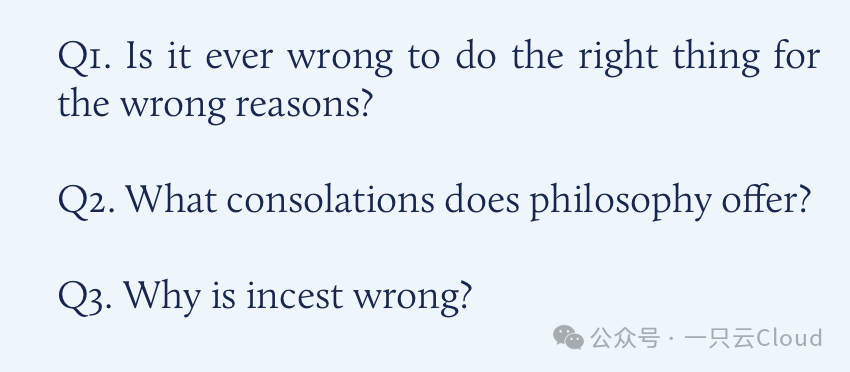
The law treats incest as a mala in se crime [3], an offense rooted deeply in religious and moral principles.
Úrsula’s primal fear of the pig’s tail is a simple expression of the unforeseeable genetic consequences of inbreeding. Anyone who has studied biology knows that close relatives face higher risks of inherited disease, so her fear has a real basis. But what turns incest into a wrong? Fear may exist; encoding that fear as a clear taboo cannot be deduced from an individual’s feelings alone. It requires social coding. Talcott Parsons (1954) treated the incest taboo as one of the common core features of human societies [4]. Its stable core lies within the nuclear family [5]—siblings, parent and child, and so on—with rare exceptions such as Mormon endogamy. Incest threatens the family’s stability as society’s basic unit.
One function of the taboo is to push individuals “out” of the family. Through exogamy, it opens wider networks of social connection. Incest avoidance drives people into new relationships and social fields, encouraging attachments beyond the family and preventing individuals from remaining psychologically undifferentiated.
Westermarck effect
In The History of Human Marriage, Finnish anthropologist Edvard Westermarck proposed that men and women raised together in childhood—especially before age six—feel little sexual attraction to one another as adults, whether or not they are related. The phenomenon, known as the Westermarck effect, is thought to be an evolved mechanism against inbreeding. China’s child-bride system offers a natural experiment: such marriages generally report lower happiness and fertility [6]. Freud explicitly challenged this “Westermarck hypothesis” in Totem and Taboo, arguing that the earliest sexual excitations were incestuous [7, 8]. Humans, he suggested, harbor unconscious desires toward relatives that social prohibitions must restrain; this became another route to the Oedipus complex. The disagreement marks a central divide between biological evolution and psychoanalytic repression.
Totem and Taboo
Published in 1913, Totem and Taboo was one of Freud’s major works. He was proud of it, saying he had not felt so confident in a book since The Interpretation of Dreams, and calling it his “greatest and last good book.” Its importance is second only to The Interpretation of Dreams, and it explores a remarkable range of unusual subjects. Its four essays, influenced by Wundt and Jung, examine incest anxiety; taboo and ambivalent feelings; animism, magic, and the omnipotence of thought; and the return of totemism in childhood. Freud also emphasized the meaning of the primal father’s murder, tracing morality, religion, and culture to the remorse that followed. The book is demanding, fascinating, and rewarding. Following Freud’s unusual line of thought leads to several central questions that later generations continue to debate. If there is interest, we can explore it in more detail another time.
In the first chapter, Freud argues that incest taboos bind tribal life more tightly than civilized society. The extreme fear of incest among so-called “savages,” he claims, mysteriously replaces blood relations with totemic relations. Exogamy requires members to seek partners outside the tribe. A “totem” is an animal treated as sacred and believed to carry the tribe’s spirit; people who share a totem may not mate with one another, and the totem animal may never be hunted. The incest taboo is already contained within this totemic prohibition.
Totem, the Oedipus complex, and the myth of the primal father
This is Freud’s most controversial claim. He imagines totemism arising from a “primal father” myth: sons expelled by their father unite to kill and eat him. Overcome by guilt, they worship the father in divine form, replacing him with the totem animal. After overthrowing the father, the brothers establish an incest taboo to soothe their guilt—renouncing the thing they most wanted, access to women. Since no one brother can replace the father alone, they also establish exogamy to preserve peace.
In Freud’s theory, the incest taboo is the product of repressed desire. Drawing on the Greek Oedipus, who unknowingly kills his father and marries his mother, Freud describes the Oedipus complex as a child’s desire for the opposite-sex parent and rivalry with the same-sex parent. He argues that the taboo’s strength corresponds to the intensity of the desire it represses. Totemism prevents incest and replaces blood ties with social relationships, creating distinctive systems of kinship terms. Primitive morality and religion, Freud concludes, arise from guilt over the father’s murder; the totem system embodies the Oedipus complex.
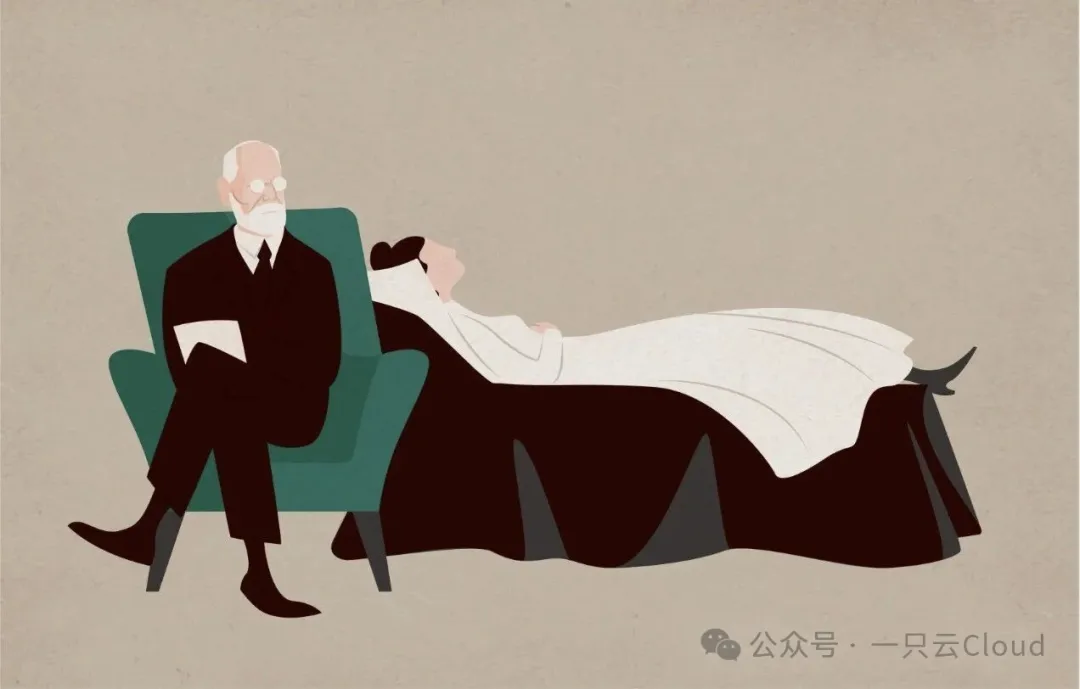
Image source: https://www.simplypsychology.org/sigmund-freud.html
For decades, writing on the origins of the incest taboo was dominated by the binary “instinct versus learning,” “nature versus nurture.” Biosocial theory seeks to move beyond that split. Parsons wrote in 1954 that something as universal as the incest taboo is almost certainly produced by a cluster of factors deeply embedded in the foundations of human society. “Sociological and psychological considerations must be combined; any attempt to bypass either field leads to difficulty” [9]. We therefore cannot answer why incest is wrong from biology or psychology alone. Unpredictable health risks, the moral confusion and disruption of social order that accompany incest, and an instinctive disgust all matter. Human beings have raised the biological tendency toward incest avoidance into the cultural rule of an incest taboo—from avoidance behavior to a normative prohibition. It is an expression of the interaction between biological foundations and cultural symbols.
Author’s note:
BACK.
Work cites
In order of appearance:
1 The Editors of Encyclopaedia Britannica. (n.d.). incest. Encyclopaedia Britannica. Retrieved September 3, 2026, from https://www.britannica.com/topic/incest
2 Gebhard, P.H. (2026, August 25). human sexual activity. Encyclopedia Britannica. https://www.britannica.com/topic/human-sexual-activity
3 Yodkhul, S. (2015). ความผิดฐานมีเพศสัมพันธ์ในเครือญาติ (Incest) [Master's thesis, Thammasat University]. Thammasat University E-Thesis Archive. http://ethesisarchive.library.tu.ac.th/thesis/2015/TU_2015_5501031776_4131_3142.pdf
4 Parsons, T. (1954). The incest taboo in relation to social structure and the socialization of the child. The British Journal of Sociology, 5(2), 101–117. https://doi.org/10.2307/587649
5 Ropmay, D. D. (2017). A note on the incest taboo: The case of the matrilineal Khasis. IOSR Journal of Humanities and Social Science, 22(5), 41–46. https://doi.org/10.9790/0837-2205014146
6 Westermarck, E. (1891). The history of human marriage. Macmillan.
7 Freud, S. (1913/1950). Totem and taboo: Some points of agreement between the mental lives of savages and neurotics (J. Strachey, Trans.). W. W. Norton.
8 McLeod, S. (2024). Sigmund Freud's theories. Simply Psychology. https://www.simplypsychology.org/sigmund-freud.html
9 Parsons, T. (1954). The incest taboo in relation to social structure and the socialization of the child. The British Journal of Sociology, 5(2), 101–117. https://doi.org/10.2307/587649
Nagle, L. E. (2004). The grammar of incest: Boundary violation, disgust, and the slippery slope trope. Cardozo Public Law, Policy & Ethics Journal.
Wertheimer, R. (1976). What is wrong with incest? Inquiry, 19(1–4), 243–259. https://doi.org/10.1080/00201747608601785
Totem and Taboo. (2024). Encyclopaedia Britannica. https://www.britannica.com/topic/Totem-and-Taboo