
A friend and I finally settled on a rough direction for our competition project.
Because I had already finished economics, my rational thinking had apparently retired. I impulsively ordered a jar of spirulina powder. By the time I realized it did not fit our topic, it had already shipped, so I decided to indulge my personal curiosity and experiment with food.
(Thanks to the teammate who gave me the idea.)

A quick disclaimer: I tolerate strange flavors unusually well, and my baking often looks alarming. None of this food went to waste! Still, I do not recommend trying these recipes.
BTW, a word about laboratory sponsorship…
Our high-school student research team is developing innovations in green technology and brain health. We have made early progress on green extraction of quercetin, but school laboratory limitations are making the next stages difficult.
🟢 We would love to hear from anyone who can offer shared laboratory resources, guidance from an expert or experienced mentor, or sponsorship. Please contact me to learn more!
Our group may look reckless at times, but we will treat every data point rigorously. Every bit of support becomes a possibility for advancing green medicine. We hope to explore the boundaries of science with people who share our curiosity. Our love of research is real. 🫶
------------------------------------------
🔘 The idea of “superfoods” has entered the public conversation in recent years. Research describes them as foods that may support overall health, energy, immunity, hormone production, and the healthy operation of the body’s systems—provided they are part of a balanced diet and consumed in moderation.
The concept of superfoods has gained popularity in recent years. Research shows that superfoods are excellent for improving overall health, boosting energy and immunity, enhancing serotonin and other hormone production, and supporting the smooth functioning of the body's systems—but only when consumed in moderation as part of a balanced diet.
Reference: Superfoods: Recent Data on Their Role in the Prevention of Disease https://www.foodandnutritionjournal.org/volume6number3/superfoodsrecent-data-on-their-rolein-the-prevention-of-diseases/?utm_source=chatgpt.com
Commonly cited superfoods include:
Fruits
Pomegranate, berries, blueberries, raspberries, strawberries, goji berries, chickpeas, grapes, acai berries, and sea buckthorn.
Dried nuts
Walnuts, almonds, and grains.
Pulses
Red beans, cocoa, sweet potatoes, and mastic.
Vegetables
Broccoli and spinach.
Seaweed
Spirulina and chlorella.
Dairy products
Kefir and donkey milk.
Herbs
Ginger, ginkgo biloba, and tea.
Bee products
Honey, royal jelly, and wax.
I have introduced quite a few superfoods before, especially teas. If I have time, I may bring the research reports my classmates and I wrote over here too (consider this a promise to myself).
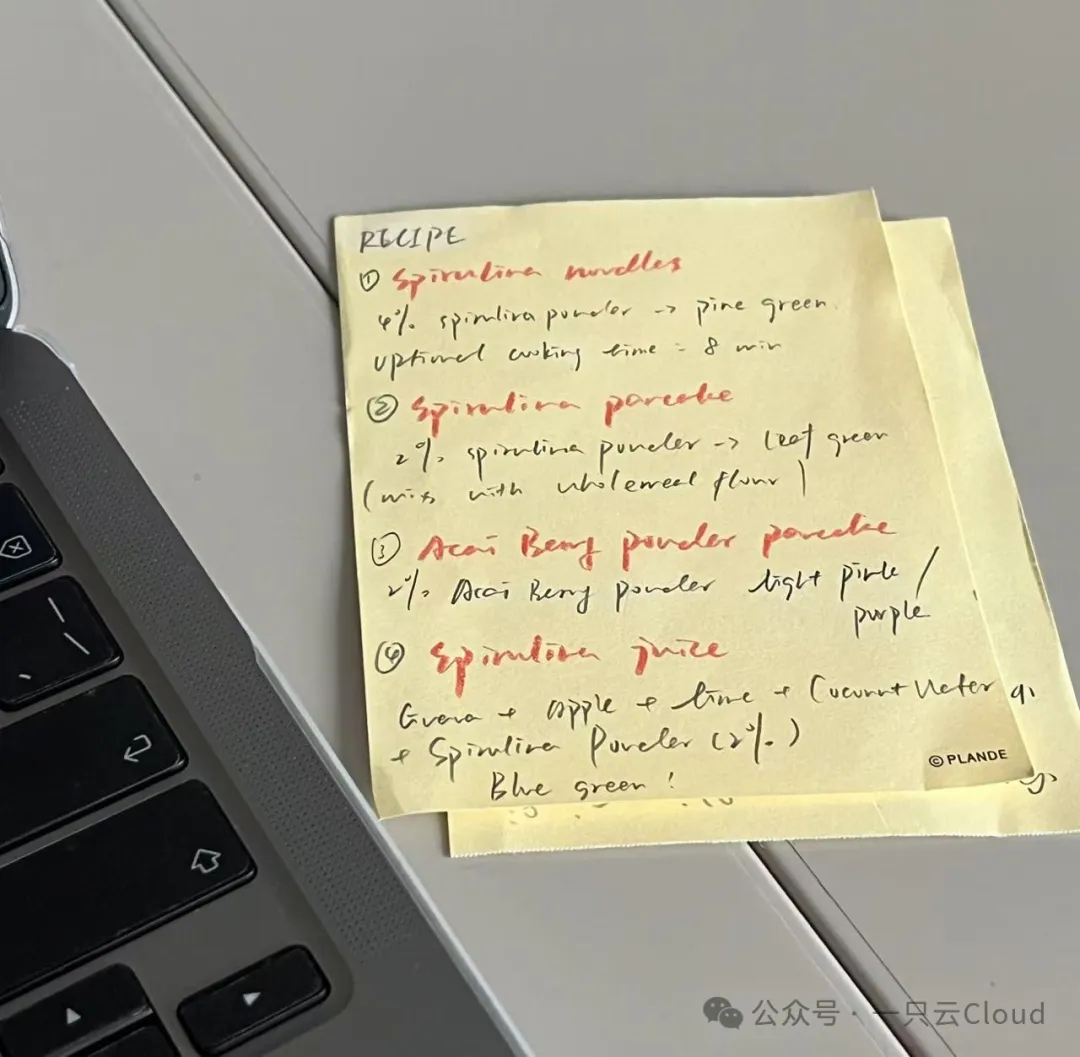
Today I built recipes around three superfoods:
· Acai berries (Euterpe oleracea)
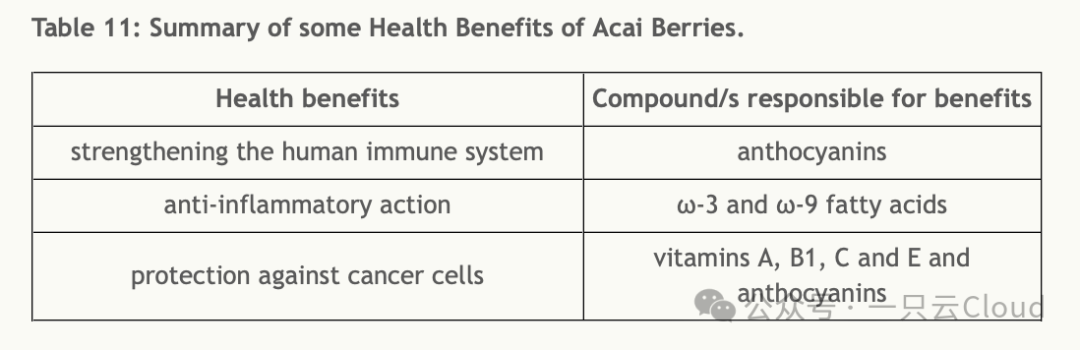
Acai berries are rich in antioxidants, and their many health benefits have been documented. They contain abundant anthocyanins and, by some comparisons, even more protein than eggs. Their antioxidant profile is what earns them the “superfood” label.
Studies have documented both acai berries’ high antioxidant content and their many health benefits. They contain abundant anthocyanins and a high protein content—even higher than eggs—which, alongside their antioxidant properties, gives them their superfood status. See the figure below:
· Spirulina (Arthrospira platensis)
Spirulina is an edible blue-green freshwater alga. It contains more than one hundred nutrients and is one of the richest plant sources of protein, along with useful vitamin B12 and phytochemicals with strong antioxidant properties.
Spirulina is an edible blue-green freshwater alga, scientifically known as Arthrospira platensis. Studies continue to find a wide range of nutrients in it—more than one hundred in all. It is among the richest plant sources of protein and contains useful vitamin B12 and phytochemicals with strong antioxidant properties.
· Cocoa
Cocoa contains abundant polyphenols. Its antioxidant capacity exceeds that of many foods marketed as superfoods; it may help neutralize free radicals, slow aging, reduce inflammation, and improve insulin sensitivity.
Cocoa contains a large amount of polyphenols. Its antioxidant capacity far exceeds that of many superfoods. It helps neutralize free radicals, delay aging, reduce inflammation, and may also improve insulin sensitivity.
1. Spirulina noodles
Reference: “How Spirulina Powder Affects Dough Properties and Noodle Quality”
https://xuebaozk.haut.edu.cn/article/doi/10.16433/j.1673-2383.202401080002
The optimal cooking time is eight minutes, and the amount of spirulina powder can be adjusted to taste.
optimal cooking time :8min.
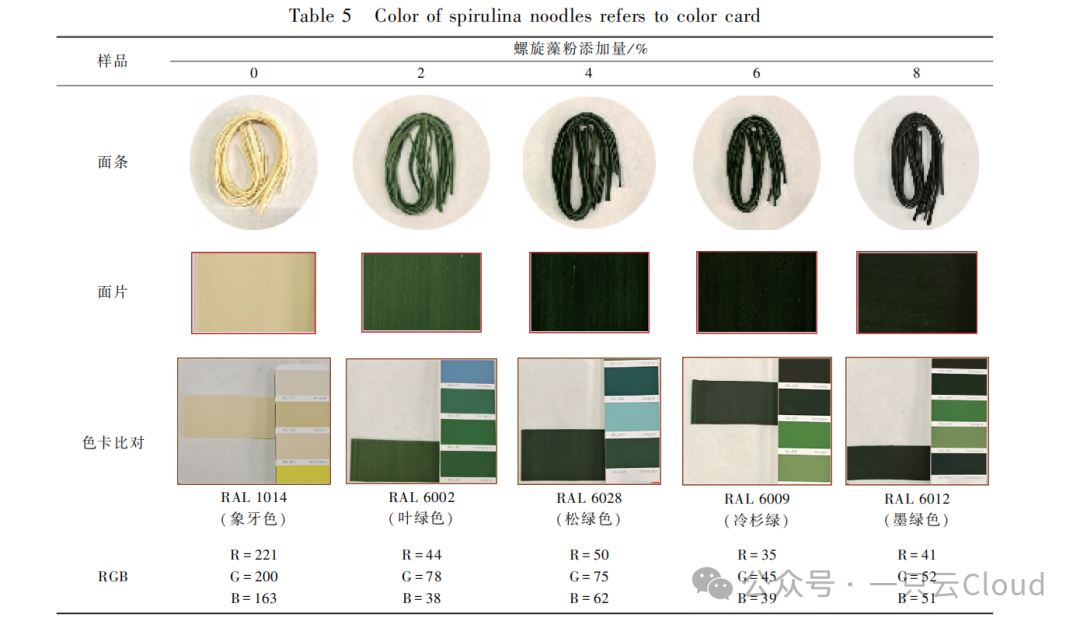
The concentration of spirulina powder can be adjusted as needed:
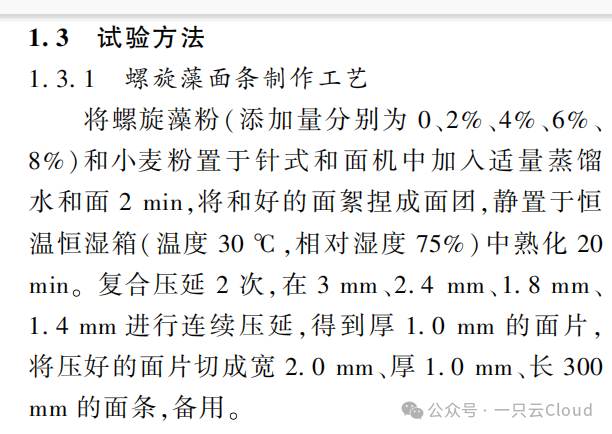
The main steps are as follows::
If you want to try it, use the color chart to decide how much spirulina to add.
Unfortunately, my practical skills are limited, and after several attempts I failed.
My practical skills let me down, so I ended up using ready-made pasta and stirring the spirulina powder into the sauce instead.
So I used ready-made pasta and stirred the spirulina powder into the sauce. Here is the result:
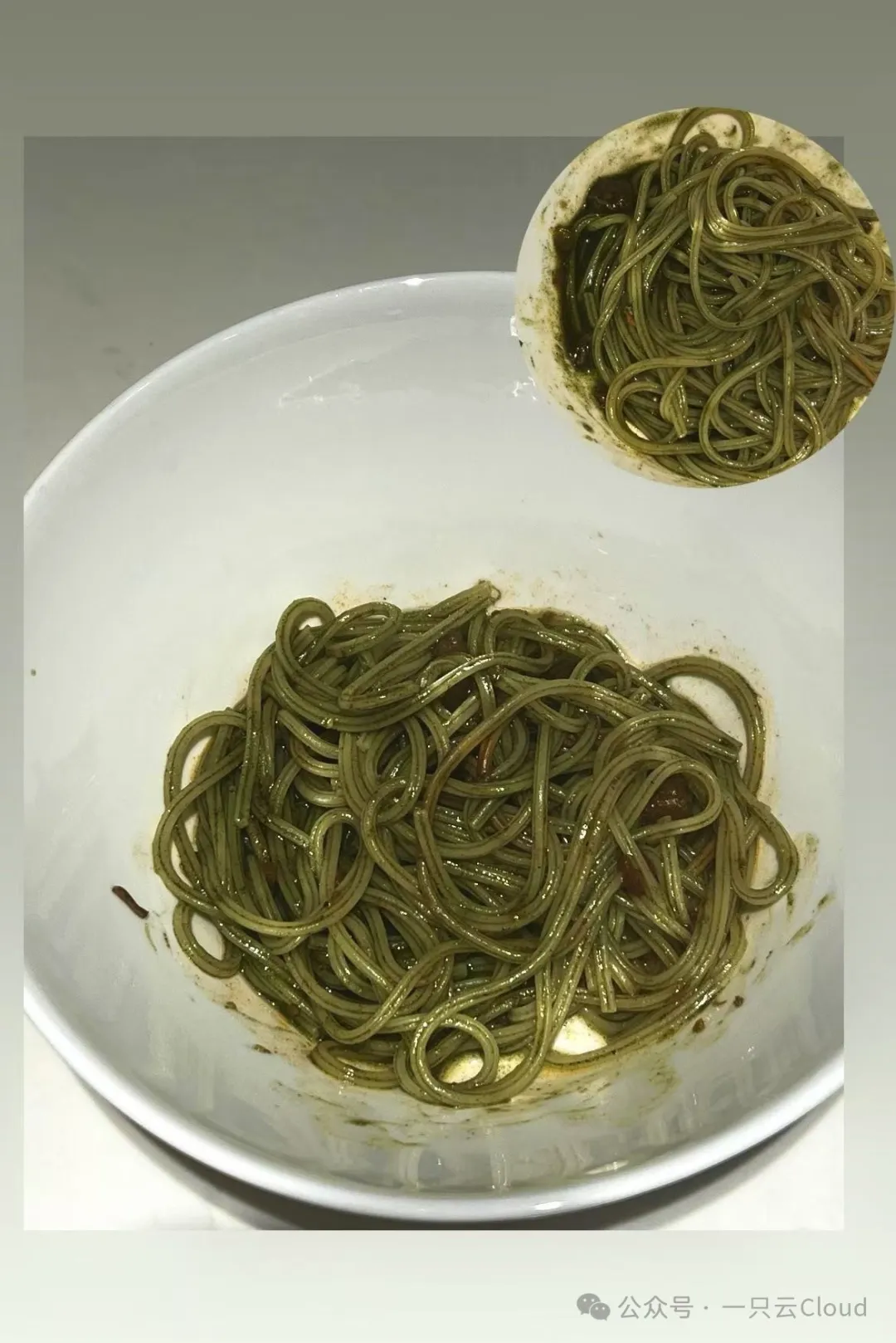
Taste: The flavor was complicated and downright wicked. Spirulina loses some color at high heat, so I added too much. The texture is hard to describe; sometimes you get a mouthful of powder clinging to every noodle. Spirulina itself is fishy—the purer it is, the fishier it tastes. Heat softens the smell, but it still filled my nose. I kept drinking water while writing this because the aftertaste would not leave. This method perfectly solves the problem of pasta lacking a fishy flavor.
Taste: Spirulina is naturally fishy. Cooking it at high heat softens that smell, but it still assaults my nose. I have been drinking water nonstop because the taste refuses to leave. This recipe perfectly solves pasta’s unfortunate lack of fishiness.
Score:-5/10
2. Spirulina, acai, and cocoa pancakes
This recipe is my own: I simply added spirulina, raw cocoa, and acai powders to my everyday batter. (Use unalkalized raw cocoa powder; it is rich in fiber and minerals and contains no added sugar.)
This is my own recipe—really just different powders added to my usual batter. (Choose unalkalized raw cocoa: it is rich in fiber and minerals and has no added sugar.)
One serving:
100 ml oat milk (I am lactose intolerant; use whichever milk you prefer).
1 egg
75 g whole-wheat flour
8 g sugar substitute, such as erythritol or stevia (adjust to taste)
1 g baking soda
10 g baking powder
12 g melted butter or vegetable oil
For each variation, add about 5 g of the superfood powder to the base batter. Adjust the amount for appearance and taste. The secret to beautiful pancakes is low heat—let them color slowly.
Tips:Cook on low heat.
Taste: Honestly, the three versions are not very different. The acai is slightly tart, but none of them is unpleasant; jam makes them quite good.
Taste: Honestly, I could not tell much difference between them. The acai version was a little tart, but none tasted bad.
Score:5/10
3. Spirulina juice (a.k.a. Prince Charming Soup)
This is a one-to-one recreation of “Prince Charming Soup” by Xiaowen’s Diary:
Guava + apple + lime + passion fruit + coconut water + spirulina powder (the original recipe gives no exact amount; adjust for color and taste) + blackberries, blueberries, or raspberries.
Guava + apple + lime + passion fruit + coconut water + spirulina powder (no fixed quantity; adjust for color and taste), served with blackberries, blueberries, or raspberries.
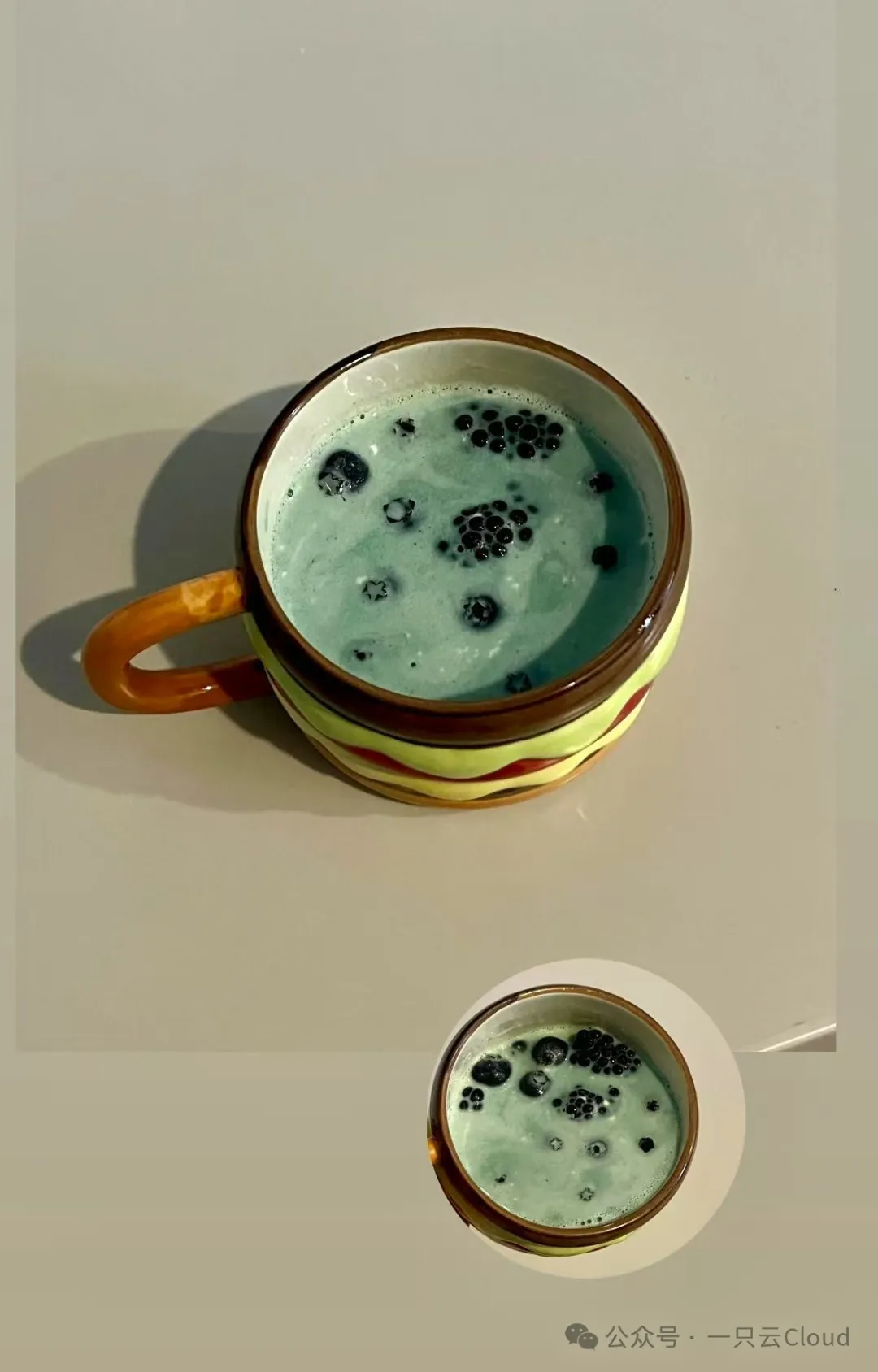
Remember to strain it, or it will turn out like mine.
Taste: Also complicated. If you like thick, intensely sweet juice, you may enjoy this. I do not. The fishy note is mild, probably because I used very little spirulina. Also, blackberries are so sour.
Taste: Another complicated one. If you enjoy thick juice, this is quite good, but I do not like such intense sweetness. The fishy flavor is mild, perhaps because I used very little powder. And those blackberries are sour.
Score:3/10
I have been incredibly busy, but I will keep updating. None of these recipes is recommended: besides tasting bad, excessive heat can destroy the compounds that make these foods useful.
(There is nothing scientific about this post—I was just playing around, haha. Please take it lightly and do not try it. When my mother saw what I was making, she laughed and asked how I had come up with such combinations.)