
Our moral duty to treat non-human animals well arises from their capacity to experience interests, such as pleasure, rather than from rights—a humane consideration that resonates across societies. This capacity can be understood as the sole fundamental basis for extending moral concern to them.
We treat animals well and accept obligations toward them not because they possess moral or legal rights, but because society agrees that their suffering should be avoided and their welfare—their interests—promoted.
In The Metaphysics of Morals, Kant explicitly limits rights-bearing subjects to “rational beings capable of understanding universal laws.” He holds that only rational beings can be moral agents.
Animals that lack rationality are thus excluded from the sphere of moral concern, while their welfare still deserves a place in our moral deliberations.

To explore the claim that animals deserve humane treatment because they have interests rather than rights, we can divide it into two questions:
1. Why do animals have interests but not rights?
2. Why can an interest alone be enough to require human moral concern?
These questions address the conceptual and theoretical foundations of rights and interests, and their practical implications.
I. Why do animals have interests but not rights?
Why do animals have interests but not rights?
The essential distinction is that rights are moral or legal entitlements emphasizing a subject’s autonomy and inviolability, whereas interests concern the benefits that meet a being’s needs and contribute to its welfare. In other words, rights correspond to obligations that moral agents must honor; interests call for care toward moral patients.
Some defenders of animal rights therefore argue that “recognizing animals’ interests means granting them rights.” At its heart, this argument shifts the basis of moral consideration from the capacity for rational agreement to the value of lived experience itself.
To answer it, we must be clear about the deep connection between rights and duties. From the perspective of rights, holding them requires a capacity for moral judgment (Carl Cohen). Populations and ecosystems, however, are amoral.
Nature operates through energy flows and competition for resources; predation and parasitism do not require a framework of rights to explain them. Predators need not respect a prey animal’s “right to life,” and migrating birds change their routes in response to climate. These are responses to survival interests, not assertions of moral judgment. On this account, non-human animals cannot hold rights.
From the other side of rights—duties—fulfilling obligations requires a social contract among rational individuals, grounded in the reciprocity of right and duty (Recht & Pflicht). This is central to explaining the origin of rights, as in Rawls’s theory.
Non-human animal societies have no such social contract. Dolphins, for instance, may spontaneously help injured companions out of empathy, but they do not collectively establish a law prohibiting harm to their own kind.
Although animals can display empathy and altruism, these behaviors do not arise from the rational deliberation characteristic of a human social contract. They therefore cannot establish a relationship of reciprocal recognition. Without this source of moral obligation [5], they cannot participate in constructing a moral community. Lacking both moral judgment and an awareness of the duties that accompany rights, non-human animals cannot claim those rights.
Neuroscience shows that non-human animals have neural circuits similar to ours and can experience emotions, pain, and pleasure. Comparable neuroanatomical and neurochemical foundations support complex emotional and conscious activity. Yet few animals pass the mirror test; on this argument, they lack self-awareness and moral reasoning, including an understanding of others’ mental states. Taken as scientific evidence, these findings support including animals among the recipients of moral concern rather than among rights-bearing subjects.
Neuroscience may establish animals as moral patients, but it still leaves a fundamental ethical question unanswered: why should a single interest—the capacity to suffer—oblige humans to take them into moral consideration?
II. Why can an interest alone justify human moral concern?
Why can interests alone justify human moral concern?

Existing legal systems divide the world into two broad categories: “persons,” who hold rights, and “property,” which does not (Harvard law professor Kristen Stilt, as cited in Feinberg, 2016). Yet even where animal rights are not generally recognized, reducing animal suffering has become an ethical minimum. European Union animal welfare legislation, for example, takes welfare rather than rights as its basis, prohibiting cruelty and requiring suffering to be minimized at slaughter. Welfare can be understood as government support for disadvantaged members of society. Through their long coexistence with humans, animals have become part of our society; when their needs and interests are not fully met, they occupy a disadvantaged position. Government support should therefore reach non-human animals through welfare.
“Animal law” is thus fundamentally about protection and welfare without necessarily rising to the level of rights. In June 2002, for example, Germany laid out requirements to avoid unnecessary suffering when animals are killed, without granting them legal rights. Animal law can remain a system of protection and welfare without becoming a rights framework. At the heart of human-animal relations lies the protection of animals’ interests and an active response to their suffering, rather than an abstract debate over legal metaphysics.
Moreover, simply recognizing animals’ interests can generate strong obligations toward them.
This is especially apparent in contested areas such as research and food production. Factory farming, for instance, causes enormous suffering. Even if non-human animals are not moral agents who hold rights, humans still have a duty to reduce avoidable suffering. Our humane treatment of animals rests on our own responsibilities as moral agents (Rollin).
Kant holds that humans have indirect duties toward animals, because cruelty to them damages our humanity. It corrupts character and can alter how we treat other people. As he puts it in his lectures on ethics: “Our duties toward animals are, in fact, duties toward ourselves… because a person who is cruel to animals also becomes hard toward other people.” Cruelty also breaches a second duty: our responsibility to maintain our own moral integrity. Caring for animals is therefore, fundamentally, a way of preserving our humanity.
In short, the capacity to suffer is enough to require humans to protect animals, without first resolving the dispute over who holds rights.
III. Observations on the contemporary animal rights movement
Tom Regan, a leading defender of animal rights, argues that animals, like humans, are “subjects of a life” and possess rights to life, bodily integrity, and freedom. He extends this status—personhood—to beings capable of experiencing pain, pleasure, desire, and satisfaction, granting them intrinsic value and moral rights. Yet the criterion is ambiguous: it may exclude some humans, such as infants or people with severe cognitive impairments, while including higher animals such as apes.
Consider this: if a fetus lacks rights because it has no self-awareness, should a pig that likewise lacks self-awareness nevertheless receive a higher moral standing because it can feel pain? Expanding moral status this way blurs natural differences between humans and animals and stretches the boundaries of the moral community too far.

Non-human animals are sentient and have real experiences, but they cannot understand moral rules or accept responsibility for violating them. They are therefore moral patients. Yet although they are not ends in themselves, neither are they mere tools. On humanitarian grounds, we accept a duty to reduce their suffering. This is the principal reason to treat non-human animals well and take their interests into account (Bentham).
In Kantian thought, rationality is a central condition of moral agency. Since animals lack it, they are excluded from the community of moral agents. The “species egalitarianism” advocated by the animal rights movement, however, can in practice mean giving animals priority and supporting their rights even, in extreme circumstances, at the expense of human lives. Regan broadens the criterion of the subject-of-a-life further, arguing that humans and animals should enjoy equal moral rights, including life and liberty. But is this equality justified?
Looking carefully at humans and animals, we can identify significant and morally relevant differences. As Part I explains, animals are moral patients, not moral agents. Animal rights activists nevertheless argue that animals deserve the same treatment as humans. Their claim is not that the two are identical, but that the differences do not matter morally. Bernard E. Rollin writes: “If we can find no morally relevant difference between humans and animals, that is the strongest basis for examining animals’ moral status.”
Humans develop moral capacities through cultural evolution, not biological evolution alone. Because we possess moral awareness, we bear greater moral responsibilities; animals do not bear those responsibilities. Christianity, for example, gives humans a distinctive moral status as beings created in God’s image, associating the soul with rational capacity. This provides a philosophical basis for excluding animals from moral agency and reinforces humanity’s moral distinctiveness. On this account, morality’s domain does not extend beyond humans.
The animal rights movement has clear weaknesses. Its supporters often demand absolute protection, opposing the use of non-human animals and condemning all exploitation, including commercial farming, fur production, and scientific research. That is plainly impractical in the world as it stands. Animal experiments are necessary in scientific work; even organizations as forceful as the RSPCA and OneKind acknowledge a need for some animal research.
Charles Darwin testified against a ban on animal research, arguing that refusing it for fear of harming animals would be a greater evil because it would obstruct the acquisition of knowledge.
Historically, our understanding of antibodies, vitamins, and insulin owes much to animal experiments. Such work has enabled extensive investigation of the nervous system and major advances in understanding the brain, genetic disease, immune responses, viral illness, and other medical problems. These developments would not have been possible without animal research. Animals as research subjects have enabled medicine to save and restore countless lives. An animal rights theory that rules out this option must therefore be rejected. The movement’s assertion that medical science no longer needs animal subjects can also be shown to be mistaken.

What I am really trying to explore is this:
Can we define our relationship with animals and secure their humane treatment and legal protection through an interests-based framework, without recognizing animal rights?
My answer is yes.
Our interactions with animals can benefit them. In Ethics, Animals, and Science, Kevin Dolan describes several such benefits. Domestication, for instance, spares animals many struggles for survival, while laws protect them from abuse, improving their living conditions. Advances in veterinary medicine have also greatly improved survival and supported welfare. These examples show us meeting non-human animals’ interests without granting them rights.
Animal experimentation is not the same as humane slaughter. Utilitarianism still prohibits unnecessary harm, because killing runs against the interests-based principle of minimizing suffering. Scientists therefore try to accommodate animals’ interests and conduct experiments within legal requirements. In some fields, the law itself requires animals to be used to test potentially harmful substances.
Arguing that animals have interests rather than rights does not give us a better excuse to exploit them. It asks how maximizing overall welfare can guide their treatment and provide stronger moral protection.
V. Conclusion
The heart of humane treatment is balancing human interests with animal welfare, rather than treating animals as rights-bearing subjects. This position rests on two judgments: animals lack the capacity to participate in a system of rights, and existing theories of animal rights retain logical weaknesses.
Work Cited
In order of appearance:
Books
Becker, Lawrence C.Property Rights (Routledge Revivals): Philosophic Foundations. Routledge, 2014.
Bentham, Jeremy. An Introduction to the Principles of Morals and Legislation. 1780.
Bentham, Jeremy. The Collected Works of Jeremy Bentham: An Introduction to the Principles of Morals and Legislation. Clarendon Press, 1996.
Bentham, Jeremy.A Treatise on the Principles of Morals and Legislation. 1789.
Bryant, Taimie L. Animals Unmodified: Defining Animals/Defining Human Obligations to Animals. 2006.
Cohen, Carl, and Tom Regan. The Animal Rights Debate. Rowman & Littlefield, 2001.
Darwin, Charles.On the Origin of Species. John Murray, 1859.
Dolan, Kevin.Ethics, Animals, and Science. Blackwell Science Ltd., 1999, pp. 144-179.
Duffy, Regis A., and Angelus Gambatese, editors.Made in God's Image: The Catholic Vision of Human Dignity. Paulist Press, 1999.
Feinberg, Joel.The Moral Status of Animals. Oxford University Press, 2015.
Kain, John.Kant and the Ethics of Animals. Routledge, 2010.
Kant, Immanuel.Groundwork of the Metaphysics of Morals. Translated by Mary Gregor, revised by Jens Timmermann, Cambridge University Press, 2024.
Kant, Immanuel.Lectures on Ethics. Edited by Peter Heath and J.B. Schneewind, translated by Peter Heath, Cambridge University Press, 1996.
Köllen, Thomas, and Doris Schneeberger.Avoiding Unnecessary Suffering: Towards a Moral Minimum Standard for Humans' Responsibility for Animal Welfare. 2023.
Korsgaard, Christine M.Kantian Ethics, Animals, and the Law. 2013.
Regan, Tom.The Case for Animal Rights. 1982.
Rollin, Bernard E.The Ethics of Animal Welfare. Temple University Press, 2006, p. 7.
Singer, Peter.Animal Liberation. 1974.
Tuck, Richard.Natural Rights Theories: Their Origin and Development. Cambridge University Press, 1979.
Journal Articles
Becker, Lawrence C. "The Obligation to Work."Ethics, vol. 91, no. 1, 1980, pp. 35-49.
Correa-Martínez, César Alberto. "Ética Y Derecho: Encuentro Entre Utilitarismo E Intereses De Los Animales."Deleted Journal, vol. 4, no. 4, June 2024, pp. 86-111. doi:10.62407/rces.v4i4.117.
"Do Animals Have an Interest in Liberty?"Political Studies, vol. 57, no. 3, Aug. 2008, pp. 660-79. doi:10.1111/j.1467-9248.2008.00742.x.
Meijboom, F.L.B., and B. Bovenkerk. "Fish Welfare: Challenge for Science and Ethics." Journal of Agricultural and Environmental Ethics, vol. 26, no. 1, May 2012, pp. 1-6. doi:10.1007/s10806-012-9399-6.
Pildes, Richard H. "Why Rights Are Not Trumps: Social Meanings, Expressive Harms, and Constitutionalism."The Journal of Legal Studies, vol. 27, no. S2, June 1998, pp. 725-63. doi:10.1086/468041.
Wood, Allen W. "Kant on Duties Regarding Nonrational Nature."Aristotelian Society Supplementary Volume, vol. 72, no. 1, 1998.
Websites
"Alternatives to Animal Use in Research, Testing, and Education."DG, 1 Feb. 1986, https://repository.digital.georgetown.edu/handle/10822/708325
"Animal Rights Explained."Everything Explained Today, https://everything.explained.today/Animal_rights/
The Editors of Encyclopaedia Britannica. "Cruelty to Animals | Animal Welfare, Animal Rights and Animal Protection."Encyclopedia Britannica, 20 Feb. 2009, www.britannica.com/science/cruelty-to-animals.
"Evolution Teaches That We Are Animals and to Behave as Such (Talk.Origins)."CreationWiki, www.creationwiki.org/Evolution_teaches_that_we_are_animals_and_to_behave_as_such_(Talk.Origins).
Fahad. "Animal Rights Meaning: What Are Animal Rights?"Earth Reminder, 7 Feb. 2021, www.earthreminder.com/what-are-animal-rights.
"Rights."New World Encyclopedia, www.newworldencyclopedia.org/entry/Rights.
"Shifting the Moral Burden: Expanding Moral Status and Moral Agency."Health and Human Rights Journal, 8 Dec. 2021, www.hhrjournal.org/2021/12/08/shifting-the-moral-burden-expanding-moral-status-and-moral-agency.
This was last year’s (2025) John Locke Philosophy Question 2.
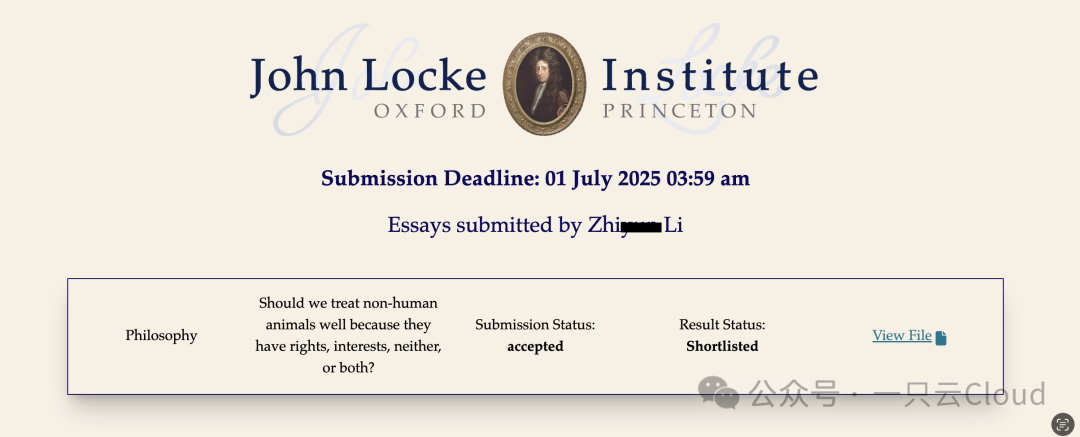
Still reheating old material. Thank you to everyone who helped me while I was writing it.
I worked on this for almost a year. Editing it today made my head buzz. I’m ready to write something new!
Happy New Year, everyone. This account is almost a year old. Thank you for reading my work; I hope to bring you better pieces this year. ❤️