 一只云 Cloud
探究心理与生理状态的相互作用机制
Exploring the interaction mechanism between psychological and physiological states
With the in-depth study of the human body, it has been revealed that acute anxiety triggers rapid heartbeat acceleration via sympathetic activation, while cyclical fluctuations in mood and reflect ovarian-endocrine interactions.
These phenomena collectively demonstrate that the bidirectional communication between psychological states and physiological responses operates through more sophisticated pathways than previously recognized.
近年来,越来越多的研究正在揭开人体机制神秘的面纱。随着深入探索,人们发现在极度焦虑时,他们会有心跳迅猛加速的体验,女性在生理期前后,她们会伴随情绪和皮肤状态的波动,等等这一类现象说明了,心理状态和生理表现之间的相互作用关系远比我们想象的密切得多。
The hypothalamic-pituitary-adrenal (HPA) axis has played an important role.
对于这一些维持机体内环境平衡和调节机体衰老过程,HPA轴(下丘脑-垂体-肾上腺轴)起着重要作用。
This neuroendocrine axis employs intricate signaling cascades and feedback loops to preserve hormonal equilibrium. Let us anatomically delineate the HPA axis through its principal components:
HPA轴可以通过一系列复杂的信号通路进行调节和反馈,从而维持体内激素平衡。我们先来根据HPA轴的结构细分为几个主要部分:
1.Paraventricular nucleus (PVN) of hypothalamus: Located at the encephalic base inferior to the third ventricle, with direct neural connectivity to the pituitary.
2.Anterior pituitary gland: Situated inferior to the hypothalamus, regulated through hypothalamic releasing hormones via the hypophyseal portal system.
3. Adrenal cortex: Positioned in the retroperitoneal space superior to the kidneys, organized into three steroidogenic zones.
下丘脑室旁核,位于大脑底部,第三脑室下方,直接连接到垂体。
垂体前叶:位于脑下部,直接受下丘脑调控。
肾上腺皮质:位于肾脏上方的腹膜后区。
Through these three major regions, the body-regulating signaling pathways can be broadly categorized as: CRH and ACTH pathways.
通过这三个主要区域,这些调控身体的信号通路可以粗略分别为:CRH和ACTH信号通路。
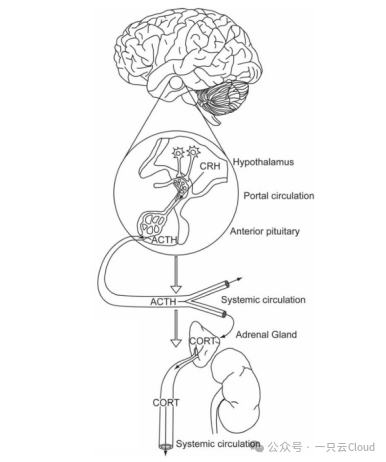
The process can be roughly expressed as:
Stress → Hypothalamus (CRH) → Pituitary (ACTH) → Adrenal glands (Cortisol) → Feedback inhibition.
在有压力的环境下,CRH信号通路起始于下丘脑室旁核,这里分泌的CRH(促肾上腺皮质激素释放激素)被接收于垂体前叶,促使其分泌ACTH(促肾上腺皮质激素)。而ACTH信号通路再把ACTH通过血液送达肾上腺,最终帮助皮质醇的合成和分泌。皮质醇再通过负反馈机制抑制CRH和ACTH的分泌,维持体内激素平衡。
In summary, the HPA axis functions as the primary stress-response mechanism, driving physiological adaptations that influence emotional and behavioral states.
所以,简单来说,HPA轴是应对压力的主要机制,会导致情绪和行为的变化。
信号通路示意图:
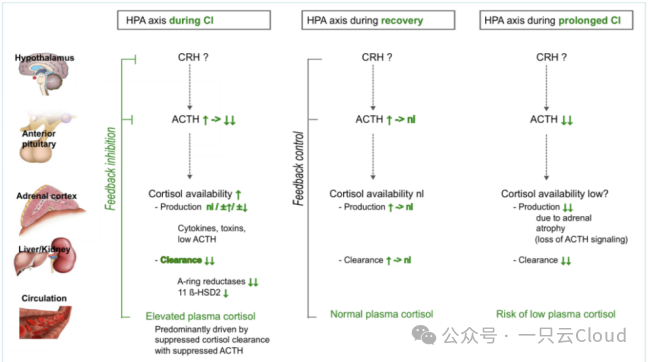
How does it physiologically function? This requires understanding the bidirectional communication mechanism of cytokines, where cytokines transmit inflammatory signals via the vagus nerve.
那它又是怎么在生理上起到作用的呢,我们还需要了解细胞因子的双向通信机制——细胞因子通过迷走神经传递炎症信号细胞因子作为化学信使,影响大脑导致“病态行为”
As previously mentioned, the primary output of the HPA axis is cortisol. Cortisol exerts its effects through glucocorticoid receptor (GR)-mediated genomic and non-genomic mechanisms, directly suppressing pro-inflammatory cytokines (e.g., IL-1β, IL-6, TNFα) and enhancing anti-inflammatory cytokines (e.g., IL-10, TGFβ).
前面我们提到HPA轴的主要输出是皮质醇,皮质醇通过糖皮质激素受体 (GR)介导的基因组效应和非基因组效应,直接抑制促炎细胞因子(如IL-1β、IL-6、TNFα)和促进抗炎细胞因子(如IL-10、TGFβ)的活性来发挥作用。
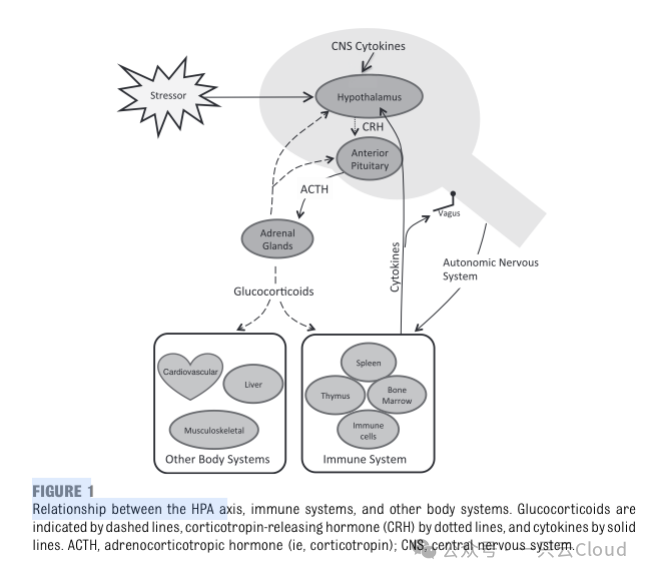
During inflammation, inflammatory mediators induce endothelial cells to express adhesion molecules (e.g., IL-1β, IL-6, TNF-α), facilitating cytokine penetration across the blood-brain barrier (BBB). Vagus nerve terminals then express IL-1 receptors to detect these cytokines. Upon cytokine signal detection, the information is relayed to the nucleus tractus solitarius (NTS), activating the PVN and HPA axis. The cortisol produced by the HPA axis subsequently suppresses immune responses, forming a negative feedback loop. demonstrating the bidirectional nature of this process that ultimately impacts multiple organ systems.
当我们身体有炎症时,炎症诱导内皮细胞表达黏附分子(CAM)促进细胞因子穿越血脑屏障(BBB)渗透,再通过迷走神经末梢到达IL-1受体。
感知细胞因子信号后,传递信息至孤束核(NTS),激活下丘脑室旁核(PVN)和HPA轴。而HPA轴产生的皮质醇又抑制免疫反应,形成负反馈。此外,神经递质如去甲肾上腺素和乙酰胆碱也会调节细胞因子的产生。因此这个过程是双向的,再通过身体作用到我们的各个器官。
This complex interplay is better visualized through schematic diagrams:
这样讲起来是不是很复杂?这是一张可以表示HPA轴、免疫系统和其他身体系统之间的关系图,这些通路就会看起来清晰很多了。
When investigating the positive regulatory circuits of the HPA axis, particular attention should be paid to its negative feedback dysregulation. Substantial evidence indicates HPA axis dysfunction is closely associated with psychiatric disorders including depression and anxiety.
通过研究HPA轴的正向环路,我们也需要关注它的负向失衡。(据研究,HPA轴功能紊乱与抑郁症、焦虑症等精神疾病密切相关)
What is cortisol?
我们一直在谈论HPA的产物之一皮质醇,皮质醇是什么?
Cortisol is a stress hormone. Therefore, any imbalance in the HPA axis will inevitably lead to a disorder in cortisol secretion. High cortisol will weaken the functions of immune cells (such as T cells) and reduce immunity. That is to say, the cortisol from the HPA axis creates a negative feedback loop and extinguishes the HPA axis and inflammatory response.
皮质醇是一种压力激素,所以HPA的失衡必定带来皮质醇的分泌紊乱,高皮质醇会削弱免疫细胞(如T细胞)功能,降低免疫力,也就是说,来自HPA的皮质醇创造了一个负反馈循环,并熄灭了HPA和炎症反应(早期生活里慢性应激的主要后果之一是HPA失调,正如发育中的神经内分泌系统一样)皮质醇的长期失衡可能诱发或加重类风湿性关节炎等生理症状。
Although the brain and the immune system are physically separate, cytokines act as chemical messengers that connect them. They play a crucial role in regulating innate immunity and acquired immunity. This also explains why these hormones have an impact on our bodies.
虽然大脑和免疫系统在物理上是分离的,但细胞因子是连接它们的化学信使,它们在调节先天免疫和获得性免疫方面起着关键作用。这也解释了为什么这些激素会给我们人体带来影响。因此,人体在面对免疫威胁时,免疫系统会产生促炎细胞因子来摧毁它?。促炎细胞因子也直接作用于大脑,导致我们可以感受到的食欲不振、疲劳、社交退缩、情绪低落等,回到了我们开头说的,焦虑时可以感受到自己心跳加速或者状态低下等症状,甚至食欲低下,出现皮肤问题等等生理症状。
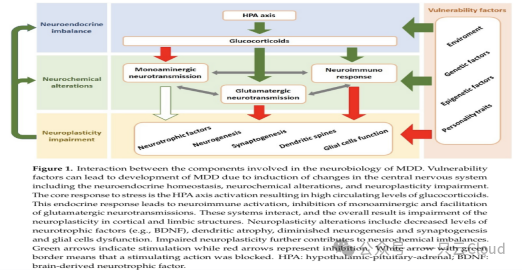
So,the HPA axis plays a significant role in various physiological functions. This chart elaborately demonstrates how the HPA axis influences neuroplasticity by regulating neurotransmitters and immune responses.
所以HPA轴在多种生理功能中起重要作用,这个图表详细展示了HPA轴如何通过调节神经递质和免疫反应来影响神经可塑性,并最终导致一系列生理和心理的变化。
Unconventional changes in the nervous system can cause various problems in many parts of the body. Look at the following picture:
神经系统的非常规变化会引起身体许多部位的不同的问题。请看下图:
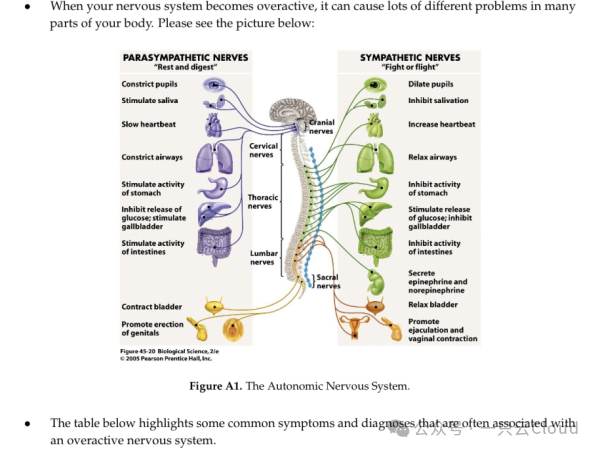
In the United States, more than 50% of Americans suffer from chronic diseases related to HPA axis dysfunction, These conditions also play a role in the pathophysiology of depression, behavioral disorders, and post-traumatic stress symptoms in adults and children.
在美国,超过50%的美国人患有与HPA轴功能障碍相关的慢性疾病(包括如低睾酮、雌激素失衡、代谢综合征、心血管疾病等等),这些症状也在成人和儿童的抑郁症、行为失调和创伤后应激症状等的病理生理学中发挥作用。
Let’sbriefly analyze the symptoms of cytokine storm and neuroimmune imbalance in two pathological states:
让我们通过深入两个病理状态下的细胞因子风暴&神经免疫失调症状来和前面的内容建立实际联系:
1. Depression: Patients exhibit elevated levels of serum IL-6 and TNFα, accompanied by downregulation of GR receptors in the hippocampus, leading to the failure of the HPA axis negative feedback mechanism.
1. 抑郁症:患者血清IL-6、TNFα水平升高,伴随海马GR受体下调,导致HPA轴负反馈失效。
2. Post-Traumatic Stress Disorder (PTSD): Pro-inflammatory factors exacerbate fear memories by enhancing amygdala activity, while prefrontal cortex inhibitory function is impaired.
2、创伤后应激障碍(PTSD):促炎因子通过增强杏仁核活性加剧恐惧记忆,并抑制前额叶抑制功能。
Thus, stabilizing cortisol secretion is key to maintaining good mental and physiological states.
因此,“稳定”皮质醇的分泌是维护我们良好心理、生理状态的重点。
Since stress responses cannot be avoided, Alright, let's get to the point. Here's some“real stuff”to alleviate these symptoms:
好了,上点干货,既然应激反应(包括考前焦虑、女性生理期的激素波动(雌激素和孕激素),神经递质如血清素的变化等)无法避免,我们可以采取以下的方式来缓解这些症状:
1. Reduce caffeine intake. Caffeine enhances the effects of norepinephrine and dopamine. After consuming caffeine, the levels of cortisol and adrenaline may double.
2. Adopt a healthy lifestyle and engage in aerobic exercise every day.(Even if you only exercise for half an hour every day)
3. When you become aware that there is something wrong with your psychological state, seek help from a doctor or a teacher in time.
1、减少摄入咖啡因。咖啡因增强去甲肾上腺素和多巴胺作用,通过抑制腺苷受体干扰睡眠周期,导致入睡困难。长期可引发慢性疲劳和认知功能下降并且突然停用可能导致头痛、疲劳、注意力下降等戒断症状。摄入咖啡因后,皮质醇和肾上腺素水平可能翻倍,并且即使有耐受性,短期影响仍然存在。
2、健康的生活方式,坚持每天有氧运动,即使每天只运动半小时。
3、当意识到自己的心理状态出现问题时,及时寻找医生、老师的帮助。
Reference参考文献:
1.On the Neuroendocrinopathy of Critical Illness: perspectivesfor feeding and novel treatmen(关于危重症患者的神经内分泌病变:营养支持与新型治疗方法的展望):
https://lirias.kuleuven.be/bitstream/123456789/551706/3/post_AJRCCM_Mar_2016_Van_den_Berghe.pdf
2.The regulatory response of the hypothalamus-pituitary-adrenal cortex stress response(下丘脑-垂体-肾上腺皮质应激反应的调节反应):
https://europepmc.org/articles/pmc4074672?pdf=render
3.Receptor Signaling in Stress and Depression(受体信号在压力和抑郁中的作用):
https://www.mdpi.com/1422-0067/20/11/2778/pdf
4.Research on the Mechanism of Stress on Immune Function(应激对免疫作用机制研究):https://m.yisbei.com/literature/detail/id/9635.html